
Kandam 9: Father, Wealth, and Fortune
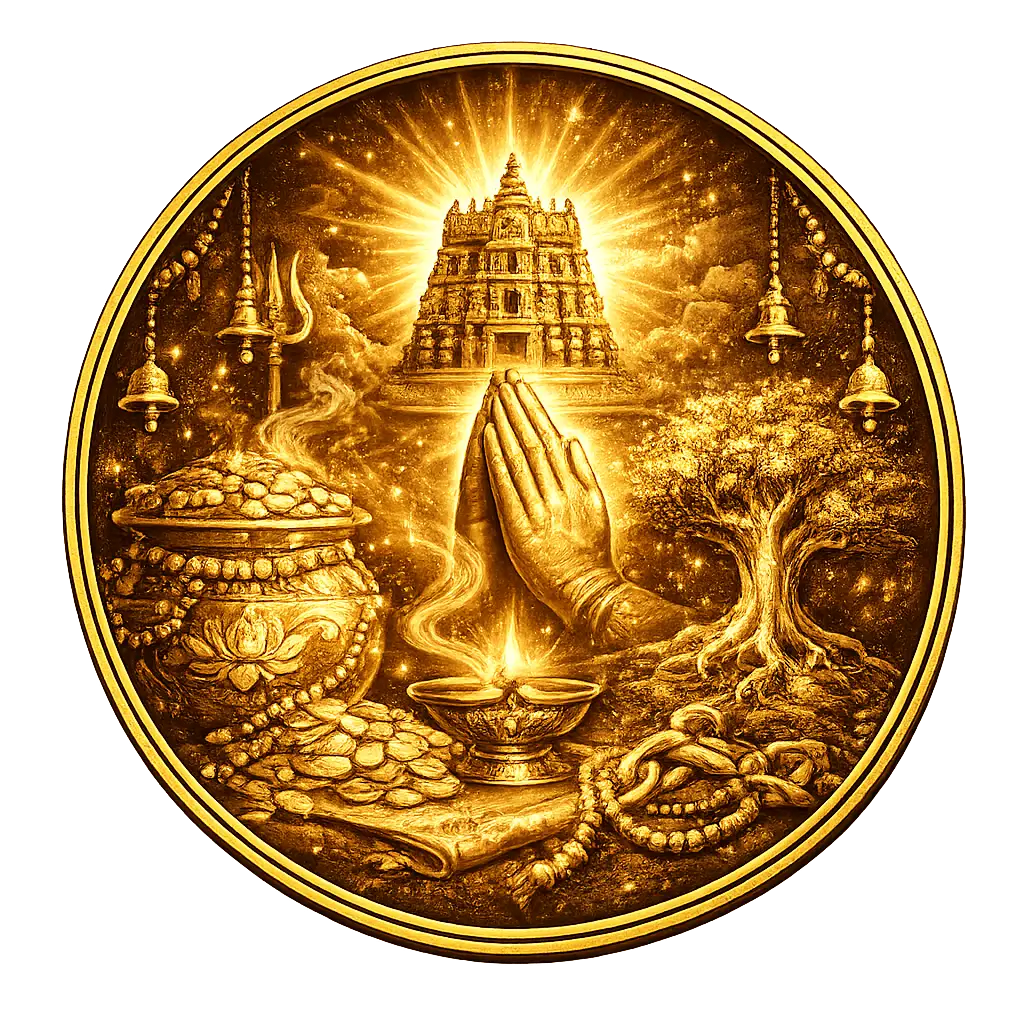
A person’s relationship with their father, their capacity to accumulate and preserve wealth, and their inclination toward spiritual and charitable pursuits are often deeply intertwined, shaped by influences that stretch back generations. Kandam 9 of the ancient Agasthiya Nadi and Shiva Nadi palm leaf tradition was recorded specifically to address this chapter of a person’s life, corresponding to the ninth house of classical Vedic astrology, traditionally associated with the father, fortune, higher learning, and dharma.
At Sivayogi Jothida Nilayam in Vaitheeswaran Koil, Guruji Dr. A. Sivasamy and his team read Kandam 9 once a seeker’s individual palm leaf has been located and confirmed through the General Kandam process. This page explains what the chapter covers, why these themes are grouped together, and how a reading can be requested.
What Does Kandam 9 Reveal?
Predictions Regarding the Father
Kandam 9 opens with predictions relating to the seeker’s father — his general wellbeing, longevity, and the nature of his relationship with the seeker. The leaf may describe periods of closeness or distance, his influence on important life decisions, and in some cases, guidance around care or remedial worship that supports his welfare. For seekers who have lost their father, this section is often approached with particular sensitivity, exploring the lasting influence of that relationship on the seeker’s own life path.
Wealth and Fortune
This chapter also addresses the seeker’s broader fortune — the capacity to accumulate wealth, periods of financial growth or challenge, and the general trajectory of prosperity across the seeker’s life. Unlike Kandam 2, which addresses money in the context of daily livelihood and immediate financial matters, Kandam 9 speaks to fortune in a wider sense, connected to the seeker’s dharma, and to the blessings believed to be inherited or earned across lifetimes.
Visits to Temples
Kandam 9 traditionally addresses the seeker’s spiritual inclination, including guidance toward specific temples that may hold particular significance for their life path. Within the Nadi tradition, certain temple visits are believed to align with a seeker’s astrological pattern in ways that support wellbeing, remove obstacles, or strengthen the positive influences already present in their life. The leaf may name specific temples or deities associated with the seeker’s spiritual journey.
Luck and Upadesam From Holy Men
This chapter may also speak to the seeker’s connection with spiritually accomplished individuals, or holy men, who are indicated to offer guidance, blessings, or upadesam, a term referring to sacred spiritual instruction, at certain points in the seeker’s life. For many seekers, encountering such guidance is described in the leaf as a significant, fortune-shaping event, and Kandam 9 may indicate the general period during which this is likely to occur.
Charitable Deeds
Finally, Kandam 9 addresses the seeker’s inclination and capacity for charitable giving, recognizing charity as both a reflection of accumulated fortune and, within the Nadi tradition, a means of generating further positive influence in one’s life. The leaf may describe the seeker’s natural disposition toward generosity, or indicate specific charitable practices believed to support and strengthen their overall fortune. Some leaves associate particular forms of giving, such as contributing to temple activities, supporting education, or assisting those in financial hardship, with especially strong benefits for the seeker’s own path, reflecting the Nadi tradition’s broader view that generosity offered outward tends to return to the giver in some form over time.
Why These Themes Are Read Together
At first glance, the father, wealth, temple visits, holy men, and charity might seem like a broad and loosely connected set of subjects. In Vedic and Nadi astrological tradition, however, all of these fall under the ninth house, understood as the house of dharma, higher purpose, and inherited fortune. The father is traditionally seen as the first source of guidance and blessing in a person’s life, temples and holy men as ongoing sources of the same kind of guidance in adulthood, and wealth and charity as the material expression of the fortune that flows from living in alignment with one’s dharma. Reading these themes together reflects the ancient Nadi sages’ understanding that a person’s material prosperity and spiritual life are not separate concerns, but two expressions of the same underlying fortune.
How Kandam 9 Connects to the Rest of the Reading
Kandam 9 does not stand entirely apart from the chapters that come before and after it. The father’s influence, described here, often echoes themes first touched upon in General Kandam and Kandam 2, where family details and financial circumstances are first introduced. Similarly, the spiritual guidance and temple worship indicated in this chapter frequently connects forward to the remedial chapters later in the sixteen-Kandam sequence, particularly Deekshai Kandam, which focuses specifically on mantra practice, and Santhipariharam Kandam, which addresses past-birth causes in greater depth. Seekers who receive a full sixteen-chapter reading often find that Kandam 9 serves as something of a bridge, connecting the more immediate, practical predictions of the earlier chapters to the deeper spiritual guidance offered later in the sequence.
Why Seekers Value Kandam 9
Seekers often arrive at this Kandam with questions that span both the practical and the spiritual: whether their father’s health and the relationship they share with him will remain stable, whether a period of financial struggle will ease, which temple they should prioritize visiting during a difficult period, and whether a teacher or spiritual guide indicated in their life has yet to appear. Because Kandam 9 connects these questions to a single, coherent astrological theme, seekers often find that it offers not just individual answers but a broader sense of the spiritual and material direction their life is meant to take.
The Tradition Behind Kandam 9
The readings offered at Sivayogi Jothida Nilayam draw from the Agasthiya Nadi and Shiva Nadi traditions, both rooted in the belief that ancient Tamil rishis, through deep meditative vision, recorded the life details of individuals not yet born, inscribing them onto palm leaves preserved and passed down through generations of Nadi reader families. Guruji Dr. A. Sivasamy’s family has practiced this tradition across five generations at Vaitheeswaran Koil, a documented lineage described in full on the center’s dedicated page. Given that Kandam 9 itself speaks to the value of guidance received across generations, whether from a father or a spiritual teacher, this multi-generational family practice offers a fitting continuity with the very themes the chapter addresses.
How the Reading Process Works
Leaf Identification
The process begins with a thumb impression, right thumb for men and left thumb for women, used by the Nadi Josiyar to locate the bundle of leaves corresponding to the seeker’s life. A horoscope may serve as an alternative starting point for those unable to visit in person, with prior appointment required for phone or online consultation.
Confirmation Through General Kandam
Before Kandam 9 is read, the Nadi Josiyar confirms the correct leaf has been located by reading identifying details from General Kandam aloud, ensuring accuracy before the reading proceeds further.
Reading Kandam 9
With the correct leaf confirmed, the Kandam 9 leaf is retrieved and translated from its original old Tamil verses, addressing the father, wealth and fortune, temple guidance, connection with holy men, and charitable inclination, with the Nadi Josiyar explaining the relevance of each point to the seeker’s current life stage.
Guidance and Remedies
Where the leaf indicates specific temple visits, charitable practices, or other remedial measures connected to fortune or the father’s wellbeing, the center provides this guidance as part of the reading, and seekers may find complementary guidance in the Deekshai Kandam, which addresses mantra practice and protective measures in greater depth.
Vaitheeswaran Koil and Its Spiritual Significance
Vaitheeswaran Koil is itself one of the temples long associated with spiritual significance in Tamil Nadu, home to a shrine dedicated to Lord Shiva in his healing aspect. For seekers whose Kandam 9 reading points toward the importance of temple worship in their life path, receiving this guidance in a temple town with such deep historical association adds a further layer of meaning to the reading itself. Many seekers describe combining their Nadi consultation with a visit to the temple itself, treating the trip to Vaitheeswaran Koil as both a practical appointment and a broader spiritual occasion, in keeping with the very themes Kandam 9 addresses.
A Deliberate, Limited Practice
Sivayogi Jothida Nilayam attends to only two seekers each day, a reflection of the depth of attention each reading requires, including the layered, multi-part predictions found in Kandam 9. The center operates from a single location with no branches, and Wednesday is observed as a holiday. Prior appointment is required for every visit, ensuring that each seeker’s reading receives careful, unhurried attention rather than being compressed into a rushed schedule.
Fees and Booking
Fees for Kandam 9, along with the standard sequence of Kandams 2 through 12, follow the center’s regular pricing structure, explained clearly at the time of appointment booking. To arrange an appointment or ask questions before your visit, seekers can call +91 9788 355 390, where the team can also advise on the most convenient date given the center’s limited daily capacity.
Frequently Asked Questions About Kandam 9
1. What does Kandam 9 cover in Nadi astrology? Kandam 9 addresses predictions relating to the seeker’s father, wealth and fortune, guidance toward specific temple visits, connection with spiritually accomplished individuals, and inclination toward charitable deeds.
2. How is Kandam 9 different from Kandam 2, which also covers money? Kandam 2 addresses money in the context of daily livelihood and immediate financial matters, while Kandam 9 speaks to fortune in a broader sense connected to dharma and inherited or earned blessings across lifetimes.
3. Will Kandam 9 tell me which temple to visit? The leaf may name specific temples or deities the tradition associates with the seeker’s spiritual path, offered as traditional guidance for the seeker to consider.
4. What does “upadesam” mean in this context? Upadesam refers to sacred spiritual instruction that a holy man or spiritually accomplished individual may offer the seeker, which Kandam 9 may indicate at certain periods of life.
5. Does this Kandam address my father’s health? Yes, Kandam 9 may include predictions relating to the father’s general wellbeing and the nature of his relationship with the seeker, approached with sensitivity where relevant.
6. Is charity something I need to actively pursue, or is it just descriptive? The leaf may both describe the seeker’s natural disposition toward generosity and indicate specific charitable practices believed to support their overall fortune, which seekers may choose to act upon.
7. Is an in-person visit required for this reading? An in-person visit with thumb impression is the traditional method of leaf identification. Phone or online consultation using a horoscope can be arranged after prior appointment for those unable to travel.
8. How do I book a Kandam 9 reading? Call +91 9788 355 390 to enquire about appointment availability, since prior appointment is required and only two seekers are attended to each day.